The Cowboy
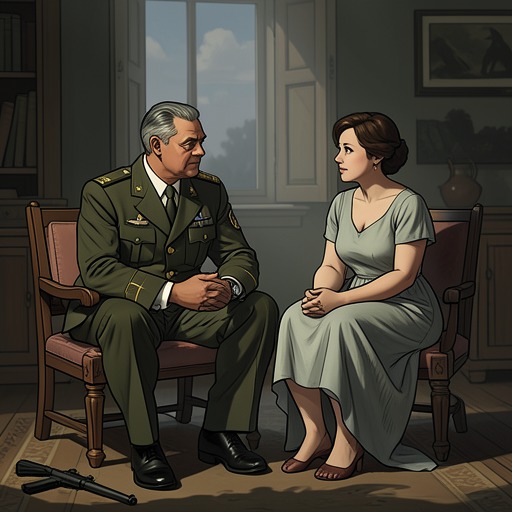
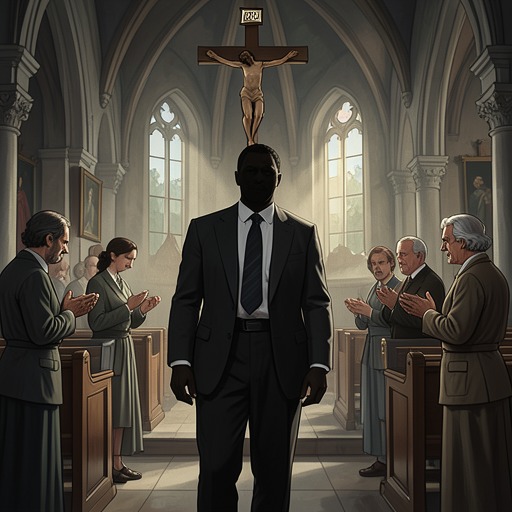
Man on FireThe Cowboy is the parish priest in Nadur, Gozo, a practical and increasingly weary confessor whose religious vocation is tested less by grand theological disputes than by the intimate problems his parishioners bring to church. He protects the secrecy of confession, helps Nadia Schembri through the long process of seeking an annulment, and faces an ethical choice when Laura Schembri asks him to hear a confession on her daughter’s behalf. His eventual judgment—that Creasy should know about Nadia’s pregnancy—places pastoral responsibility above the comfort of staying out of a family crisis.
Identity and Ministry
The Cowboy’s personal name is not given. The narrative presents him through his role as a priest serving a farming parish in Nadur, where he knows the habits and temperaments of the people who come to him. His work is embedded in the rhythms of local life: Salvu goes to church every Sunday, while Laura attends early Mass each morning. For Laura, prayer is also a family duty; she jokes to Creasy that someone has to pray for the sinners in the household. These practices show a community in which religious observance is part of ordinary routine, not merely a response to exceptional crisis.
His ministry has changed with age. As a young priest, he enjoyed hearing confessions, although the narrative notes that this was not something he would have admitted to his bishop. In Nadur, however, years of hearing the same kinds of transgressions have made the work tiresome. He can anticipate many parishioners’ confessions and even Salvu’s inventive provocations are becoming predictable. The confessional remains an obligation, but it no longer offers the novelty it once did.
Discretion and the Confessional
Salvu illustrates both the limits and the protections of The Cowboy’s position. After Salvu’s wife died, he continued to attend church and confessed what he described as the worst imaginable sins, deliberately hoping to provoke the priest. Creasy questions whether the confessional is secret. Laura confirms that it is: The Cowboy would not disclose what Salvu told him, even though Salvu himself boasts about his confessions. Salvu frames his provocations as a way of helping the priest understand what he is missing, but the priest’s silence maintains the boundary between confidential confession and public conversation.
That discretion is not the same as detachment. When Nadia comes to confession, The Cowboy sees her distress and responds to the consequences of her marriage rather than treating the matter as an abstract breach of religious rules. The marriage had been solemnized by him, and he forwarded Nadia’s annulment papers to the Holy See. He tries, in his blunt manner, to explain why the process may take years: witnesses must be found, depositions taken, and anonymous judges must decide whether the marriage can be declared invalid. The procedure reflects the Church’s treatment of marriage as sacred, but its slowness also leaves Nadia living with pain and uncertainty. The Cowboy recognizes that human cost and feels deep sadness for her.
Nadia’s Confession and the Limits of Procedure
Nadia confesses to The Cowboy that she has slept with other men since leaving her husband. She describes a young fisherman from Mġarr as someone she needed in order to know a man, and later encounters with tourists at the hotel where she works. The men, like the judges handling her case, have become faceless in her account. The Cowboy hears these admissions within the confidential setting of confession; the narrative emphasizes his compassion, not any public disclosure or condemnation.
The annulment process cannot resolve Nadia’s immediate predicament. She is twenty-six, wants the ordinary prospects of family and children, and fears that people in a small community will talk about her. Even a decision that her marriage had never existed in the eyes of God would not guarantee that a local man would marry her. Leaving the island does not appeal to her. Her return to her family home is instead a search for steadiness: she needs her parents and the familiarity of the house and land. The Cowboy’s pastoral role therefore sits at the intersection of a formal religious process and a life whose uncertainty continues while that process unfolds.
Laura’s Appeal and a Moral Decision
Later, Laura enters the confessional and first gives an account of familiar minor faults. The Cowboy hears her hesitate rather than leave, asks whether there is something more, and learns that she wants forgiveness for her daughter. He tells her that another person cannot confess for Nadia. The exchange breaks the expected routine: Laura attends early Mass every day but has not herself entered the confessional before, and her attempt to speak for her daughter forces The Cowboy to distinguish a mother’s concern from the daughter’s own responsibility.
Laura then reveals that Nadia has not told Creasy about the child and has forbidden her parents to tell him. She says Nadia conceived deliberately and used Creasy as a provider of the seed; when The Cowboy asks whether Nadia loves him, Laura admits she does not know. The priest does not pretend to possess that missing knowledge. He considers the matter uncomfortable, recognizes that Laura’s hard-headedness makes empty consolations unsuitable, and weighs the implications of giving advice. His answer is concise: “A man should know.” The decision does not settle Nadia’s feelings or determine what will follow, but it establishes The Cowboy’s judgment that Creasy’s knowledge matters even though Nadia has forbidden her family to disclose the pregnancy.
Narrative Role
The Cowboy links private belief to lived religious practice: Sunday confession, early Mass, the sacrament of marriage, and the formal handling of annulments all shape the choices and uncertainties of people around him. His character is defined by tensions rather than certainty. He can find confession monotonous and still take its secrecy seriously; he can acknowledge the sacred status of marriage while grieving the pain prolonged by its legal process; and, when asked to advise Laura, he can make a firm ethical judgment without claiming to know Nadia’s heart. Through him, religious duty appears not as a solution that removes suffering, but as a practice of listening, discretion, and deciding what another person has a right to know.